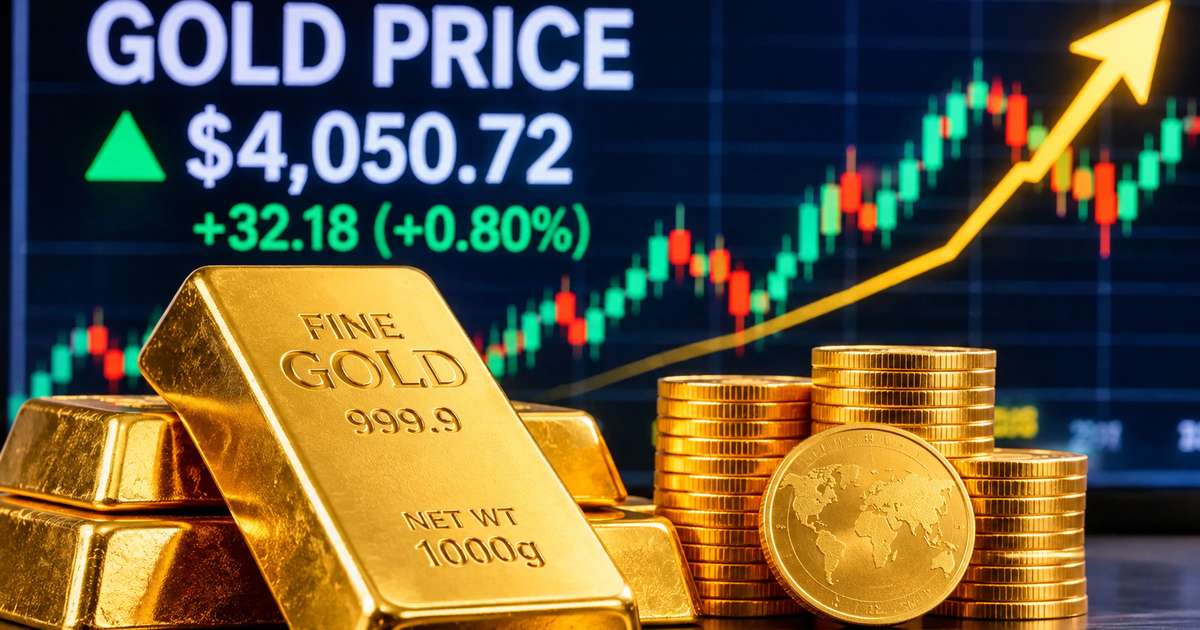
The gold price forecast for 2027 just got a lot less optimistic. Goldman Sachs has lowered its end-2027 target to $4,650 an ounce from $4,800, and it’s the bank’s second cut in about two weeks. If you follow gold, that’s hard to ignore. Here’s what changed, why it matters, and what could happen next.
Key takeaways
- Goldman now sees gold at $4,650 by the end of 2027, down from $4,800.
- The bank expects another Fed hike in March 2027, after a December hike.
- Oil-driven inflation is hurting gold instead of helping it.
- A bounce is still possible if US data softens.
What Goldman Sachs actually said
Goldman lowered its end-2027 gold forecast to $4,650 from $4,800, its second cut in a month. Its economists now expect a third Fed hike in March 2027, after a December hike. The logic is simple: more rate hikes mean less investor demand for gold.
The first cut came earlier in November. Goldman moved its end-2026 target to $4,150 from $4,650, and its end-2027 target to $4,800 from $5,400. So the 2027 call has dropped from $5,400 to $4,650 in a matter of weeks, about 14%. In September, the bank was still holding $5,400 and arguing that Fed hikes would slow the rally rather than derail it. It has clearly changed its mind.
Where is gold trading right now?
It depends on the report and the day, so treat any single number with care. Mid-November coverage had gold near $3,890, down almost 7% in about a week. A Gulf News report from midweek had it near $4,060 after a 2.6% slide. By Thursday, November 19, wire reports described gold as slumping again on rising December hike expectations. Always check a live price before making decisions.
Even from these levels, Goldman still sees upside. One analysis estimates the implied rebound to $4,650 at roughly 20% from the latest dated spot price. That’s a long road, and plenty can happen before then.
Why Fed rate hikes are hurting gold
Gold pays no interest. When rates go up, holding it costs you more in missed returns, so demand softens. That’s the main driver here.
A December hike is almost fully priced in. CME’s FedWatch tool showed about a 96% chance of a quarter-point increase at the December 8-9 meeting. Because the market expects it, the hike itself may not shock anyone. The risk is in the details. Dallas Fed President Lorie Logan has said she sees the need for at least two quarter-point increases, and Governor Christopher Waller has floated a half-point hike in December. A bigger move would likely push gold lower.
Inflation data keeps the pressure on. Gold fell for a third straight day on sticky US inflation and hawkish Fed comments, with traders watching Friday’s Producer Price Index. You can track the odds yourself on the CME FedWatch Tool and read the official schedule on the Federal Reserve’s FOMC calendar.
Why the Middle East conflict isn’t helping gold
Normally, tension in the Middle East sends investors toward gold as a safe haven. This time the effect runs through oil instead. Oil-driven inflation concerns have kept the possibility of more Fed tightening alive, and WTI crude was recently around $84 a barrel.
The chain looks like this: higher oil lifts inflation, higher inflation keeps the Fed hawkish, and a hawkish Fed weighs on gold. For now, that outweighs the haven demand. If tensions eased and oil dropped, gold might actually benefit, which sounds backwards but fits recent trading.
The technical picture: $4,000 is the level to watch
Gold has slipped below $4,000, a round number many traders treated as support. Broken support often turns into resistance, so bounces can stall near it. That’s a common pattern, not a certainty.
There’s also a flow risk. Analysts have warned that ETF investors could start selling into the weakness and deepen the drop. To be clear, that’s a warning, not confirmed outflows. Still, steep declines can feed on themselves as stop-losses trigger.
What could support gold prices
The outlook isn’t entirely bleak.
- Central bank buying. Goldman points to central bank purchases running far above pre-2022 levels. These buyers tend to step in on dips and build a long-term floor.
- Debt worries. Goldman has said renewed concerns about government debt sustainability could push prices above its central forecast.
- A future rate pivot. The bank sees gold possibly reaching $5,600 by late 2028 if demand returns as interest rates eventually fall.
- Softer data. A cooler inflation or jobs report could cut hike expectations and spark a fast rebound.
What to watch in the coming days
- Friday’s Producer Price Index and any further Fed speeches.
- The $4,000 level: does gold reclaim it or fail there?
- Fed funds futures: is a half-point December hike gaining odds?
- The December 8-9 FOMC meeting: the guidance on 2027 matters more than the 25-basis-point move itself.
- Oil prices and Gulf headlines.
- ETF holdings data, to see whether the outflow fears are real.
Bottom line: what’s the gold price outlook?
The near-term lean is downward. The Fed sounds hawkish, a key support has broken, and even Goldman, a long-time bull, has cut twice. But the drop is already steep and a lot of bad news is priced in, so a sharp bounce is possible if data or Fed signals soften. The direction is tilted down, not locked in.
This article is market analysis for information only, not financial advice. Forecasts change quickly. Check live prices and speak with a licensed financial advisor before investing.
Frequently asked questions
What is Goldman Sachs’ gold price forecast for 2027?
Goldman Sachs now forecasts $4,650 an ounce by the end of 2027, down from $4,800, after an earlier cut from $5,400.
Why is gold falling?
Mainly because of expected Fed rate hikes. Higher rates reduce the appeal of gold, which pays no interest, and oil-driven inflation worries are reinforcing that.
Will gold go down more in December?
It’s possible, since the near-term tilt is negative, but nothing is certain. Softer US data or a less aggressive Fed could trigger a bounce.
Is gold a good investment right now?
That depends on your goals and risk tolerance. Gold is volatile in the short term, so consult a licensed financial advisor.