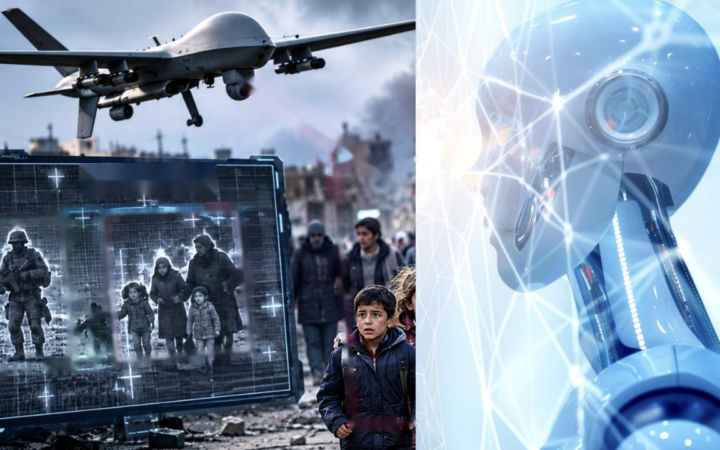
Autonomous drones in modern warfare have gone from a lab experiment to an everyday battlefield tool. Ukraine’s Ministry of Defence says drones killed or wounded about 302,000 Russian personnel between January and late October 2026.
Those are claims from one side of the war and should be read with care, but the direction they point in is not in doubt: tanks and artillery no longer define the front line the way they once did. In this guide we explain what these machines actually do, where AI really matters, what the latest wars show, and why the rules are still missing.
Key takeaways
- Most combat drones today are remotely piloted or follow pre-set routes. Fully autonomous target selection is rare and hard to verify.
- AI’s biggest military effect so far is speed: turning sensor data into decisions faster.
- Cheap drones create a cost problem for defenders, which is driving a race in counter-drone systems.
- On 21 November 2026, UN talks in Geneva failed to agree a mandate to negotiate a binding treaty on autonomous weapons.
What counts as an autonomous drone?
An autonomous drone is an uncrewed aircraft that handles part of its mission, such as navigating, searching an area or recognising objects, without a person steering it moment to moment. Autonomy is a spectrum, not a switch, and most systems in service sit somewhere in the middle.
The Red Cross (ICRC) uses a narrower definition for weapons: a system that, once activated, selects and applies force to targets without further human intervention. That is very different from “a drone that uses AI”, which can mean anything from steadier video to independent targeting.
| Level | Who decides | Example |
|---|---|---|
| Remotely piloted | A human operator, on every action | MQ-9 Reaper flown by a ground crew |
| AI-assisted | The human decides; software flags or classifies | Video analysis that highlights possible objects for an analyst |
| Human-supervised autonomy | The system acts within set limits; a human can intervene | Automated defences, drones that track a designated target |
| Highly autonomous | The system selects and engages targets after activation | The category at the heart of the legal debate; real-world use is hard to verify |
How AI-powered drones work
Think of an AI-enabled drone as a chain of five jobs. Each can be automated to a different degree, and each can fail in its own way.
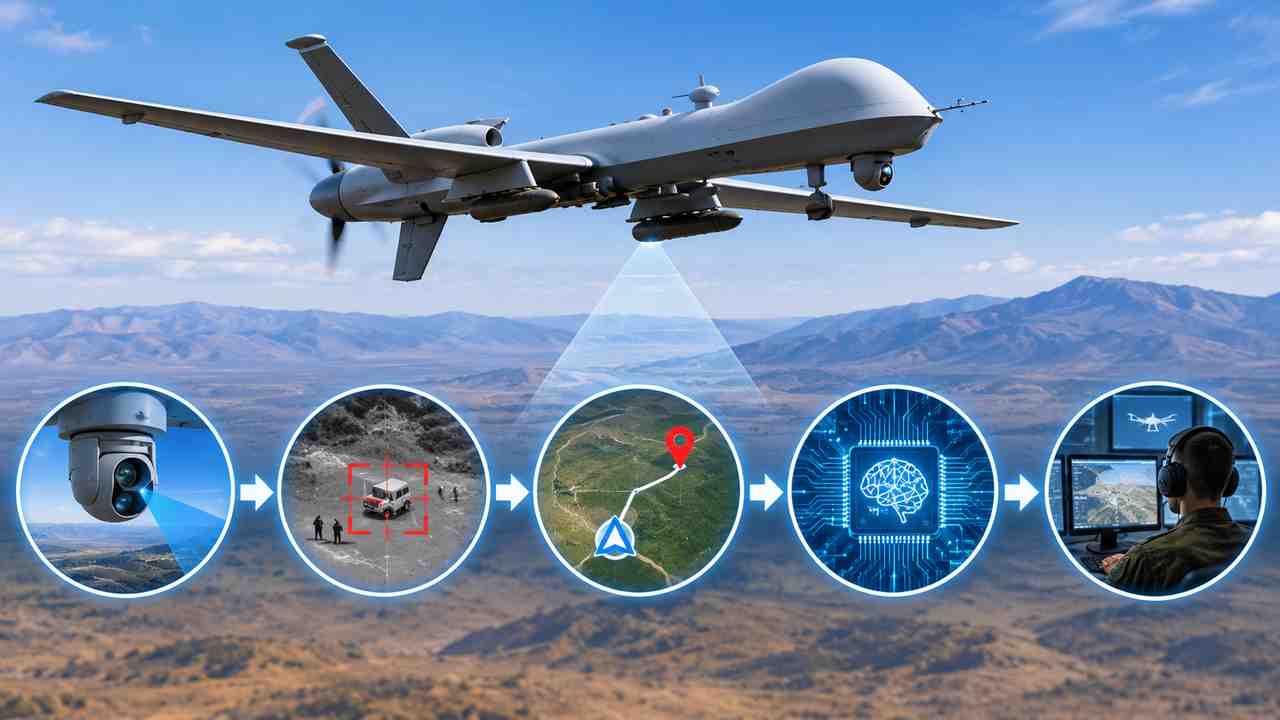
- Sensing. Cameras, infrared imagers, radar and radio receivers gather raw data. Infrared works at night, radar sees through cloud, and visible light gives the most detail.
- Recognition. Computer-vision models look for patterns they were trained on, such as the outline of a vehicle. The output is a probability, not a certainty, which is why recognition errors matter.
- Navigation. Satellite navigation is the usual reference, backed by inertial sensors. Where signals are jammed, newer systems compare camera imagery with stored maps.
- Processing. Some analysis happens on board (“edge” computing), some at a command post. More on-board processing reduces dependence on a vulnerable radio link.
- Communication and oversight. Data links carry video and commands. Ukraine’s DELTA system, for example, is used to record and verify strikes.
Two limits are worth stating plainly. Recognition software degrades in conditions it was not trained for, such as unusual weather, camouflage or cluttered cities. And a drone that depends on a data link is only as dependable as that link.
How drones are changing battlefield tactics
Drones have changed tactics in three main ways.
- They make the battlefield transparent. Cheap cameras in the air give commanders a near-continuous picture, so large concentrations of troops or vehicles are easy to spot. Forces respond by dispersing, hiding and moving in small groups.
- They deliver precision at low cost. Small strike drones now do work that once needed artillery or aircraft. Ukraine’s commander-in-chief said in February 2026 that drones account for about 60% of fire damage on the front, against 40% for artillery.
- They create a “kill zone”. When drones are always overhead, moving supplies, reinforcements and wounded soldiers becomes slow and dangerous.
Drones rarely work alone. Reconnaissance drones spot targets for artillery, electronic-warfare units jam enemy links, and air-defence teams protect troops. Commanders now plan around constant observation and assume they will lose large numbers of cheap systems.
Russia–Ukraine: the biggest drone war in history
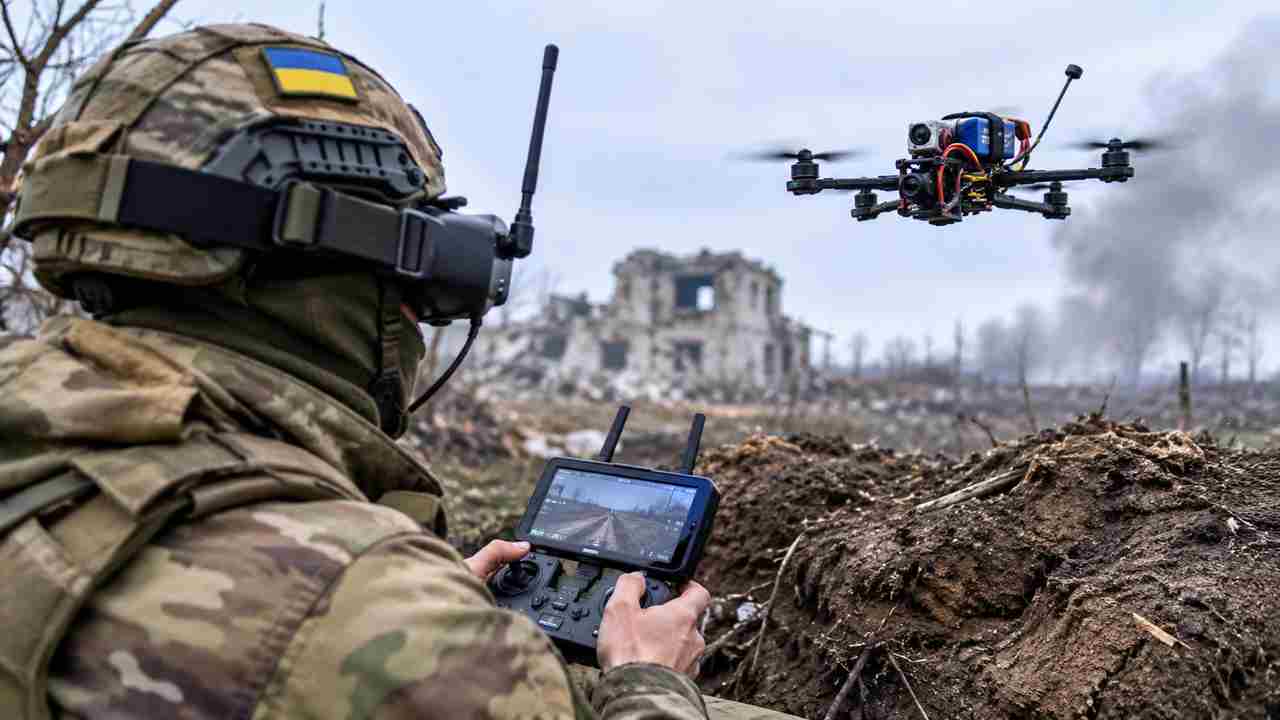
Ukraine is where the scale becomes clear. According to the country’s Ministry of Defence, drones killed or wounded 302,000 Russian personnel from January to late October 2026, with a monthly peak of nearly 34,000 in March. The ministry later reported more than 2 million verified drone hits on Russian targets this year, a figure that covers equipment as well as people.
The ministry says every hit is recorded on video in DELTA and verified by the Brave1 innovation cluster. Even so, these are figures from one belligerent and cannot be independently audited. Analysts also note that filmed drone kills are easier to count than artillery casualties, which can skew the picture.
Two more points keep the story honest:
- Analysts at the Come Back Alive Initiative found that the share of killed within Russian losses rose from 30% to 56%, and linked this partly to drone saturation making evacuation harder.
- Most of the drones doing this work are flown by people. This is a story about mass and low cost more than machine autonomy.
On the other side, Russia launched 4,442 Shahed-type drones at Ukraine in January 2026, according to the Institute for Science and International Security. That was the lowest monthly total since autumn 2025, which shows how high the earlier numbers were.
Nagorno-Karabakh, 2020: the early warning
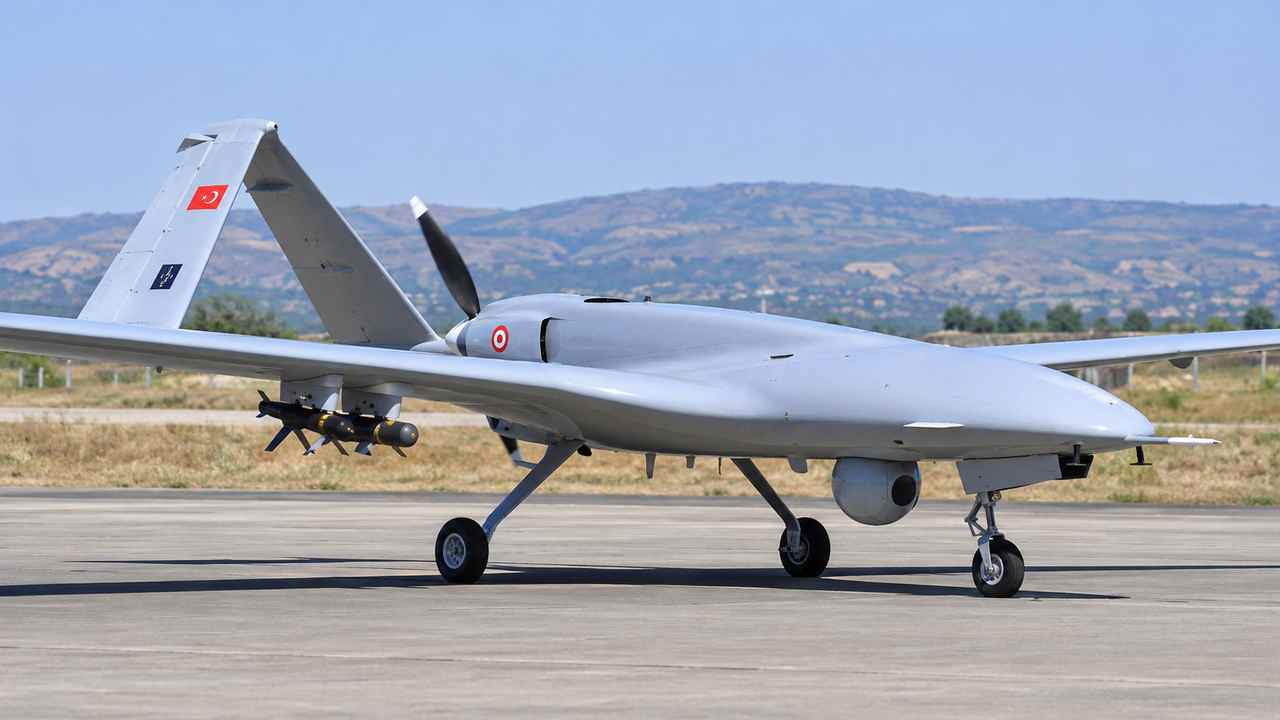
In the 44-day war of autumn 2020, Azerbaijan used Turkish Bayraktar TB2 drones and Israeli loitering munitions against Armenian forces. They hit armour, artillery and air defences that were not ready for the threat. Many analysts caution against over-reading the lesson: the drones worked alongside artillery and intelligence gathering, not instead of them. Even so, it was the first big demonstration that cheap drones can defeat unprepared defences.
The Gulf and Red Sea: the cost problem
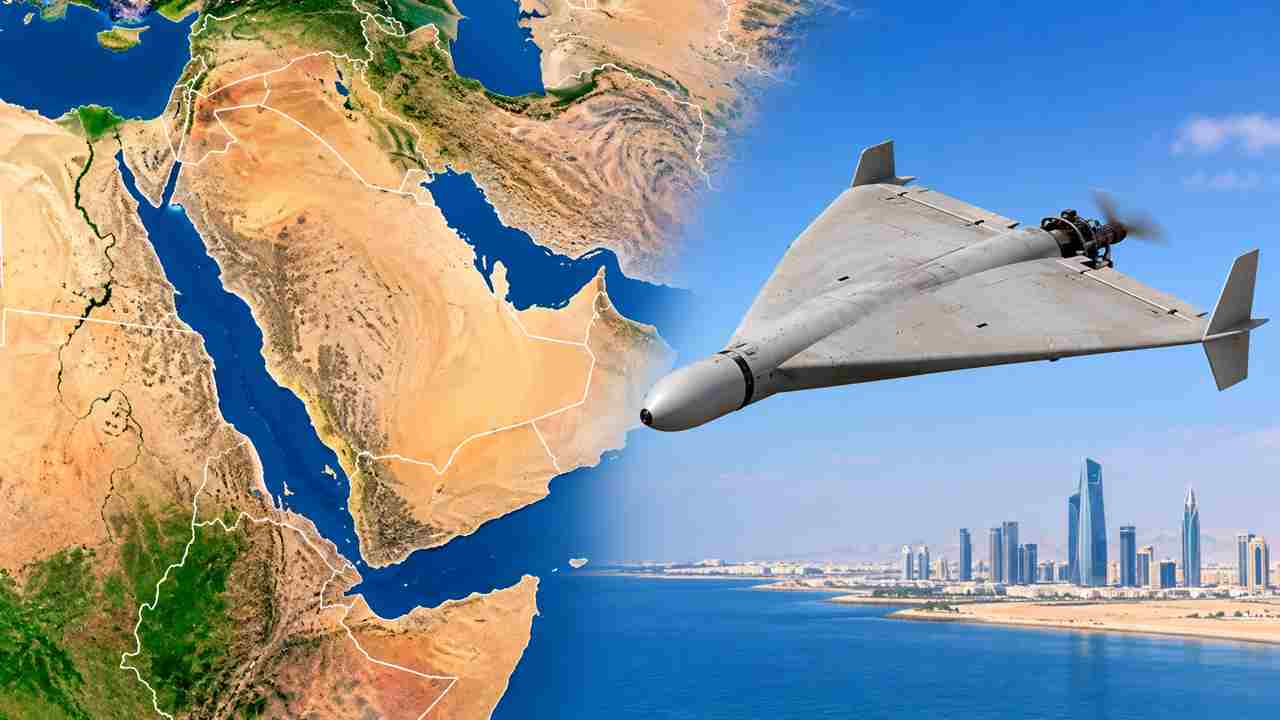
In the Red Sea, Houthi forces used drones, uncrewed boats and missiles against shipping, and also went after surveillance aircraft. The Atlantic Council counts 14 US MQ-9 Reapers the Houthis claimed to have shot down since November 2023, against only three between 2017 and 2019. These are Houthi claims, and the US has disputed some earlier tallies.
In 2026 the war involving Iran brought drones to the Gulf on a new scale. Figures published by Gulf defence ministries, as reported by Reuters, show that by 3 March Iran had carried out more than 1,450 drone strikes on regional states, about three-quarters of its attacks. Counts vary by source and by what is being measured.
The economics are the real story. CSIS estimates a Shahed-type drone costs $20,000 to $50,000, while a single Patriot interceptor costs roughly $4 million. When the defender spends many times more than the attacker, even a successful defence is a slow loss.
Swarms and the AI decision cycle
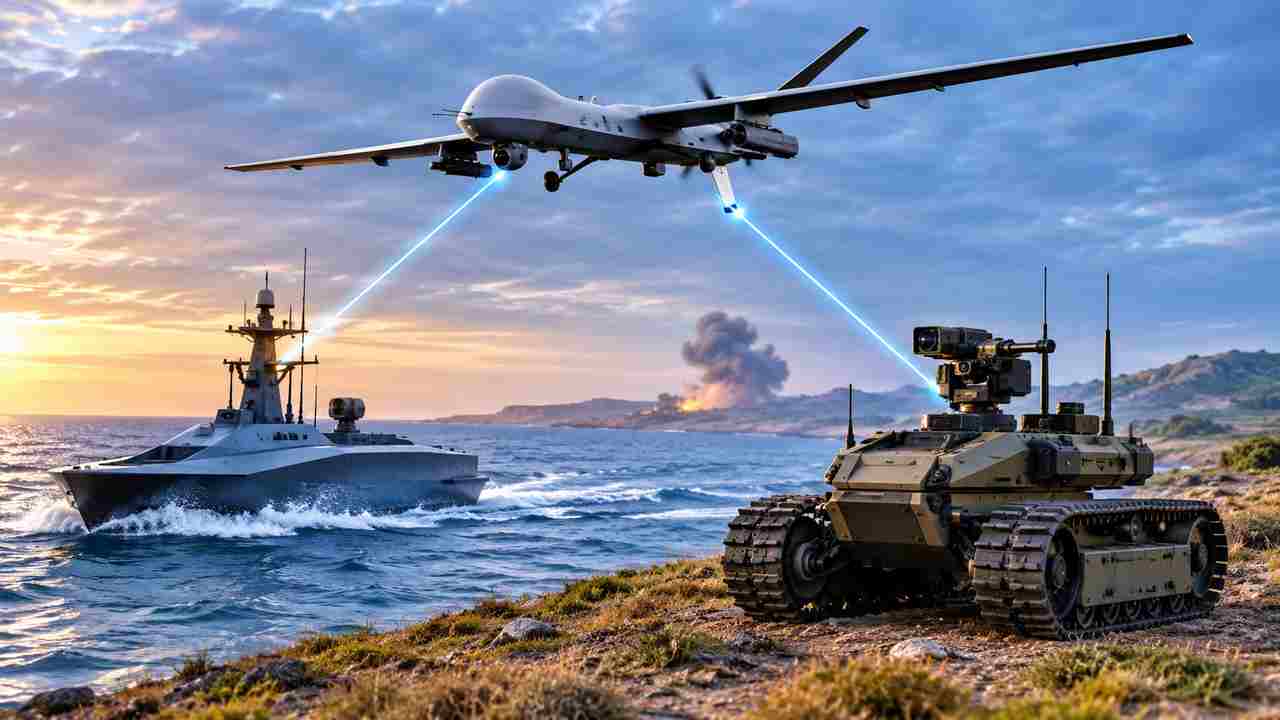
Where swarms really stand
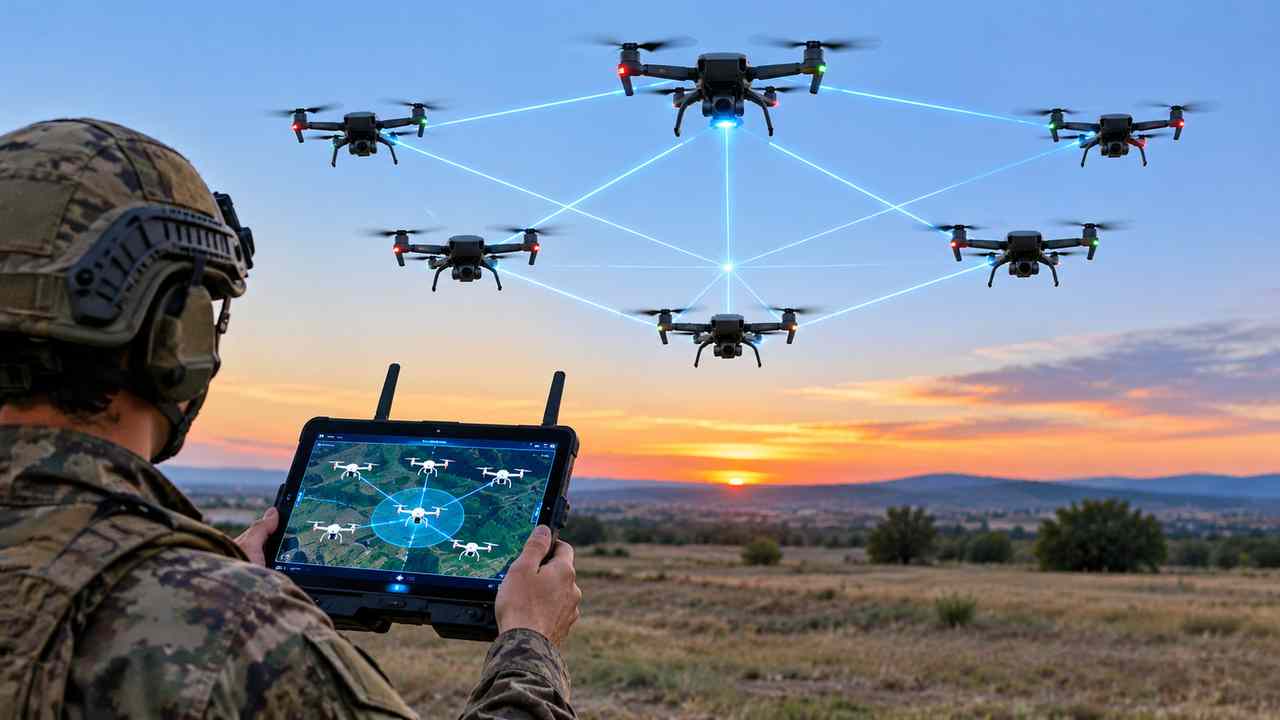
A drone swarm is usually described as a group of at least three drones that coordinate through shared software. Each shares its position and sensor data, and software divides the tasks. One operator sets the goal and watches the group.
The reality is more modest than the idea. The US Replicator initiative, launched in 2023 to field large numbers of cheap autonomous systems, was dissolved in late 2025 and folded into the Defense Autonomous Warfare Group (DAWG). The Pentagon has requested $54.6 billion for DAWG in fiscal 2027, up from about $226 million in 2026. It is a request, not approved funding, and most of it depends on legislation Congress had not passed at the time of writing.
In May 2026 the Pentagon selected Shield AI to add its Hivemind software to the LUCAS one-way attack drone as part of a pilot programme. The independence claims come from the company, so treat them as vendor claims until demonstrated.
AI’s biggest effect: faster decisions
A modern force collects far more video, radar and signals data than people can review in time. AI helps by scanning footage, labelling vehicles and activity, spotting unusual patterns and suggesting options, while people keep the judgment calls. The risks are just as real:
- Automation bias: people trust confident machine outputs, especially under time pressure.
- Opaque reasoning: many models cannot explain their conclusions, so errors are harder to catch.
- Scale outpaces oversight: one operator supervising very large numbers of systems cannot review each decision.
The counter-drone race
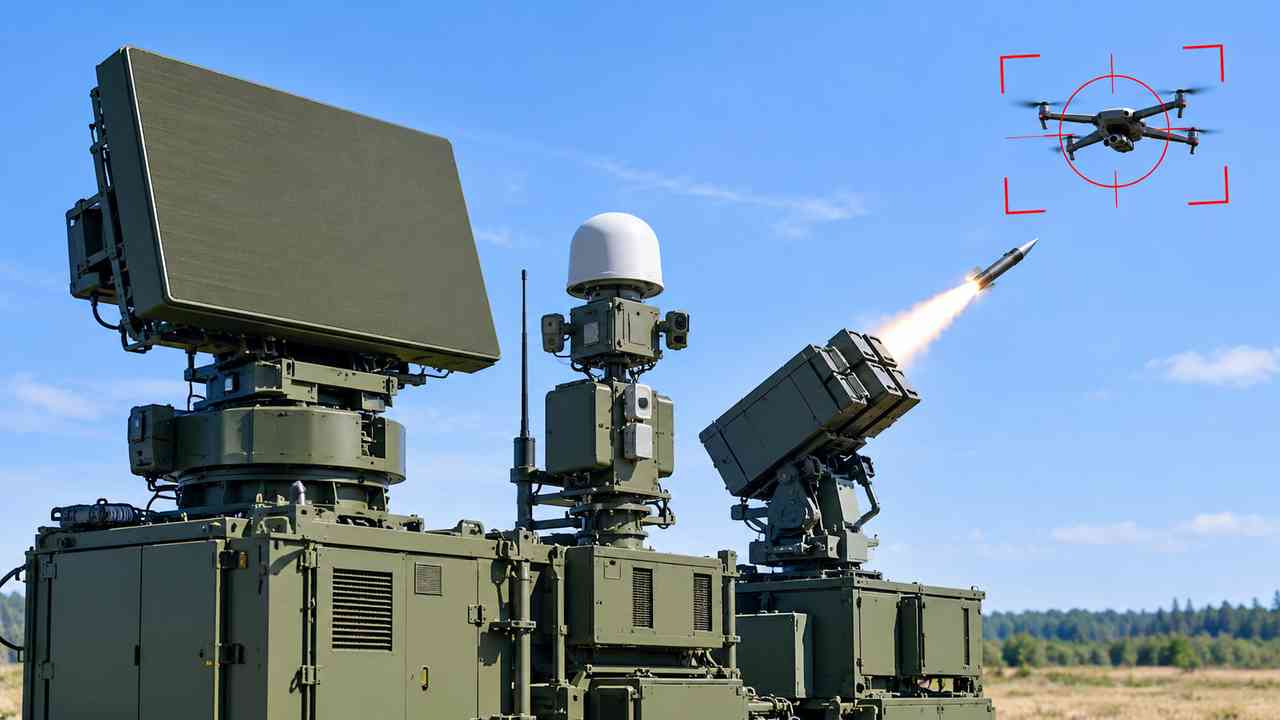
Every cheap attacker creates demand for a cheap defender. Ukraine’s answer includes interceptor drones such as the Sting, reported at around $2,500 each. Gulf states and the US have explored similar low-cost options. Electronic warfare, radar and AI-assisted detection are advancing alongside them. SIPRI describes a parallel arms race in countermeasures following the surge in drone use.
Law and ethics: where the rules stand
SIPRI’s 2026 Yearbook says AI-assisted targeting, autonomous weapon systems and drone swarms are now routinely used in armed conflict. Yet there is still no dedicated binding instrument governing armed drones.
The latest attempt to change that ended in Geneva on 21 November 2026. The review conference of the UN Convention on Certain Conventional Weapons closed without a mandate to negotiate a legally binding treaty. States did agree to work toward an instrument by 2028, but the wording may not create legal obligations. JURIST reported that opposition from major military powers, including the US and Russia, blocked a negotiating mandate under the consensus rule. Campaigners say supporters of binding rules may now look to the UN General Assembly.
The core question is no longer whether machines take part in combat. It is how much judgment people hand over to them, and who is accountable when something goes wrong.
The bottom line
Drones win attention when they are cheap, numerous and used together with other forces. Autonomy is advancing, but today’s decisive effects come mostly from scale, cost and fast adaptation. Technology on its own does not guarantee victory.
Want more explainers like this? Browse our latest technology and world analysis on Horaa.
Frequently asked questions
Are autonomous drones already making kill decisions?
Fully autonomous target selection is rare and hard to verify from outside. Most drones in combat are remotely piloted or follow pre-programmed routes, with automation in navigation and recognition.
What is the difference between a remotely piloted and an autonomous drone?
A remotely piloted drone is controlled by an operator over a data link. An autonomous or semi-autonomous drone handles some functions itself, such as holding a flight path or tracking a designated object.
Why are cheap drones such a problem for air defence?
Shahed-type drones cost an estimated $20,000 to $50,000, while interceptor missiles can cost millions. That imbalance drains stockpiles, so defenders are turning to cheaper interceptors and layered defences.
Is there an international treaty on autonomous weapons?
No. UN talks in Geneva on 21 November 2026 ended without a mandate to negotiate a binding treaty, though states agreed to keep working on an instrument until 2028.
Autonomous Drones in Modern Warfare, Sources and further reading
- Ukraine Ministry of Defence: drone casualty figures, 2026
- SIPRI Yearbook 2026, chapter 9: missiles and armed UAVs
- Defense One: the Pentagon’s $54 billion bet on autonomous warfare
- Atlantic Council: Houthi strikes on US MQ-9 Reaper drones
- JURIST: UN arms conference falls short of treaty mandate
Last updated: 25 November 2026. Figures from official sources reflect one side’s claims and may change.