
Israel- Syria tensions: Efforts to find a solution through diplomatic dialogue
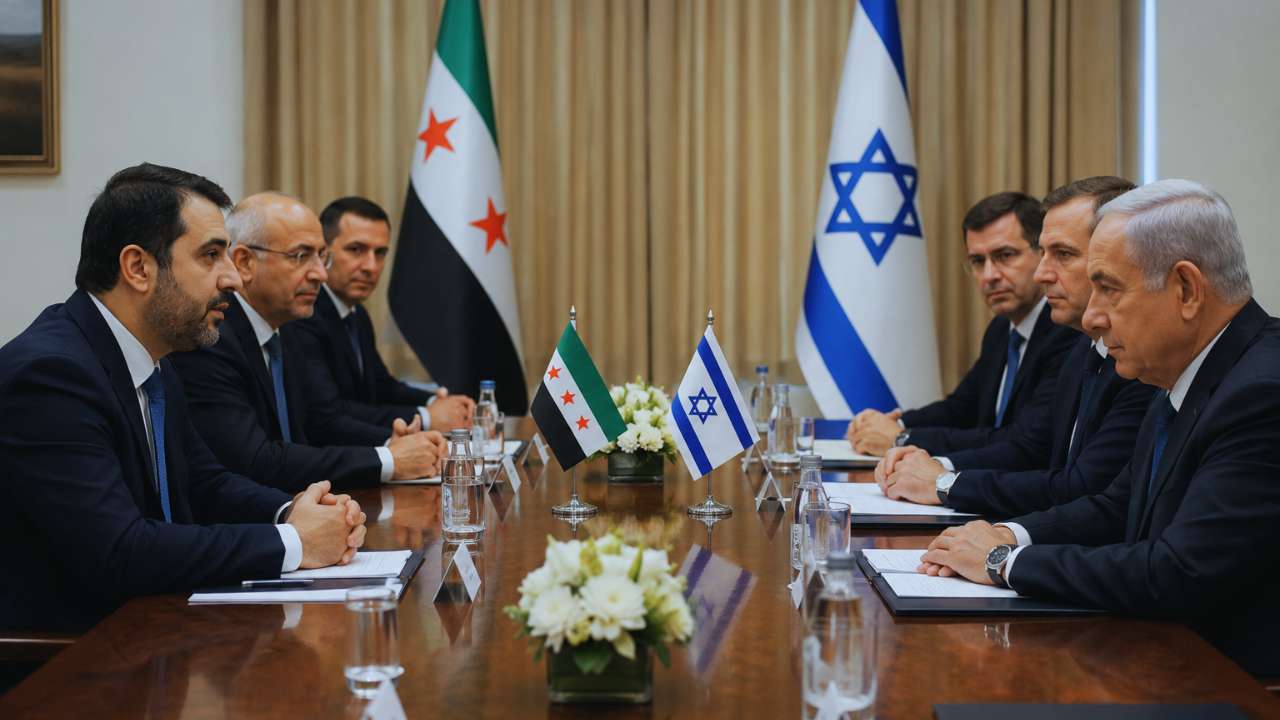
An important meeting has been held between high-ranking officials of both countries with the aim of timely controlling the escalating tension between Israel and Syria and opening new doors for diplomatic dialogue. According to the information received, the high-level meeting held on Sunday seriously reviewed the recent conflict, Turkey’s growing influence, and the sensitive situation of overall regional security.
This region of the Middle East https://horaa.xyz/category/world-news/has been the center of strategic and military conflict for decades. Relations between Israel and Syria have not been smooth since the Six-Day War of 1967. In particular, there has been a long-standing tension between the two countries over the control of the strategically important Golan Heights.
In recent years, the region has become more explosive as various neighboring powers, taking advantage of the ongoing internal conflict in Syria, have competed to expand their influence. Turning the bitter pages of history, whenever the issue of the military presence of external powers or the expansion of military infrastructure near Israeli territory has been raised, Israel seems to have been taking strong steps for its national security. According to analysts, the current tension can also be understood as a continuation of the same historical strategic distrust.
In this context, it is reported that a direct meeting was held between Syrian Foreign Minister Asad al-Saibani and the director of the Israeli intelligence agency Mossad, Roman Goffman, during the recent diplomatic dialogue. The meeting openly discussed the recent aggressive airstrikes carried out by Israel on Syrian territory and the serious impact they could have on regional stability. The security and diplomatic circles of both countries are watching the talks with great interest.
The main topic of the meeting was the recent heavy bombing by the Israeli Air Force on the strategically important Abu al-Duhur airbase in northern Syria. Last Tuesday, Israeli fighter jets dropped at least eight powerful bombs on the airbase. After the attack, relations between the two countries had further cooled and it even increased the risk of regional conflict.
Israel has presented Turkey’s increasing military activity as the main reason behind the attack on the Syrian airbase. Israel claims that Turkey is trying to expand a large military infrastructure, including drones and advanced radar systems, at the Abu al-Duhur airbase, which is only about 45 miles from the Turkish border.
Israel has also accused Turkey of seeking to expand its naval and air influence in the region, which is historically under the influence of the Ottoman Empire. The Israeli side has been issuing strong warnings to Turkey not to establish a permanent military presence or base in the region. Israel had previously warned of strong retaliation if Turkey did not stop its military expansion activities.
However, Syria has made it clear that it has no plans to allow Turkey to establish any kind of permanent military base on its territory. Meanwhile, Syrian Foreign Minister al-Saibani has acknowledged that some high-ranking Turkish military officials recently visited the airbase. However, he claimed that the visit was not intended to establish any kind of military base, but was only part of a normal process of regular training, mutual cooperation and exchange of experience.
Earlier, during a series of trilateral and bilateral talks between Israel, Syria and the United States, Syria has reportedly made a firm commitment not to allow Turkey to establish a military base on its territory. Despite such commitments, Syria believes that Israel’s sudden airstrike on the airbase was an irresponsible move.
The international community has expressed serious concern amid fears that the rising tensions could lead to a larger conflict in the Middle East. Senior diplomatic officials, including US special envoy Tom Barrack, have strongly urged Israel, Turkey and Syria to abandon the path of conflict and return to the peaceful negotiation table.
During the discussions, Syrian Foreign Minister al-Saivani said that the responsibility to maintain peace and stability in the region is the shared responsibility of all parties concerned. He warned that the continuous Israeli military operations in Syria will lead to greater instability and conflict instead of ensuring security.
Diplomatic analysts said that all eyes are focused on what concrete results these recent talks will bring in the future. Experts have emphasized that diplomatic dialogue is the most important option to establish long-term peace and stability in this sensitive region of the Middle East.
The main question now is how effective the recent diplomatic dialogue can play in reducing the growing tension between Israel and Syria. Amid the growing influence of regional powers and security concerns, maintaining dialogue could pave the way to avert a potential major conflict. Therefore, the diplomatic initiatives and behavior of the relevant parties in the coming days are seen as very important for the stability of the Middle East.